
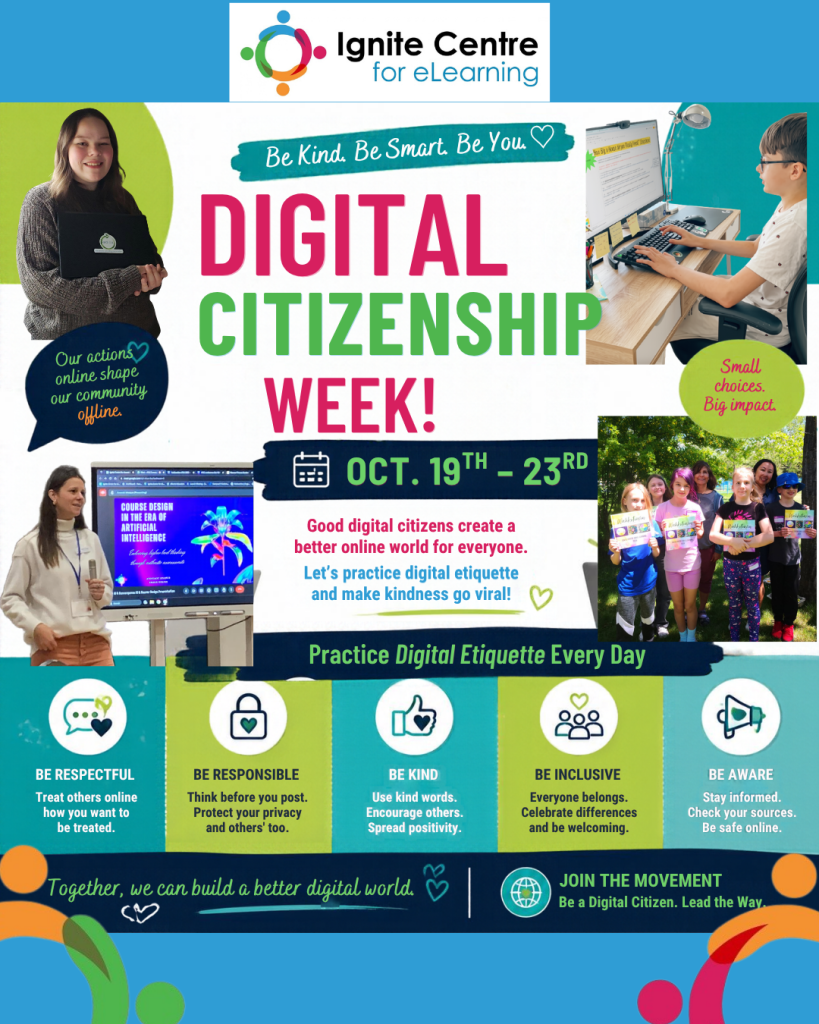
Parts of this image generated with Canva, human images are from Ignite Centre for eLearning, Oct., 2026
Digital Citizenship Week: Helping Our Students Thrive in a Digital World 🌐
Technology opens up incredible opportunities for students to learn, create, communicate, and explore. But navigating today’s digital world also requires important skills, including critical thinking, online safety, kindness, and responsible technology use.
During Digital Citizenship Week (October 19–23), Ignite Centre for eLearning is encouraging students and families to reflect on what it means to be a responsible digital citizen.
Inspired by resources from Common Sense Media, we believe that helping students succeed online involves more than teaching them how to use technology. It’s about empowering them to make thoughtful choices, recognize misinformation, protect their privacy, and treat others with respect.
Five Ways to Be a Responsible Digital Citizen
🔎 1. Think Critically About What You See Online
Not everything we read, watch, or see online is accurate. Encourage students to question information, check reliable sources, and consider who created the content and why. This is especially important when using search engines and artificial intelligence (AI), which can sometimes provide inaccurate or misleading information.
🔒 2. Protect Your Privacy
Personal information matters! Students should understand the importance of protecting their passwords, limiting what they share online, and thinking carefully before posting photos, comments, or other personal details. Our digital footprints can last much longer than we expect.
💙 3. Choose Kindness Online
Behind every screen is a real person. Positive digital citizenship means communicating respectfully, recognizing the impact of our words, and knowing how to respond when we encounter cyberbullying or unkind behaviour. Every student can help make online spaces safer and more welcoming.
🤖 4. Use Artificial Intelligence Responsibly
AI tools can support learning, creativity, and problem-solving when used thoughtfully. However, AI should help students develop their thinking—not replace it.
Students should learn to question AI-generated answers, verify information, acknowledge AI use when required, and follow their teachers’ expectations for academic work. Copying an AI-generated response without understanding it can interfere with learning and may compromise academic integrity.
The goal is to use technology to strengthen our abilities, not to do our thinking for us!
⚖️ 5. Find a Healthy Balance
Technology helps us connect and learn, but time away from screens is important, too. Making room for physical activity, hobbies, family time, and face-to-face friendships supports overall well-being.
How Families Can Help
Parents and caregivers play an important role in helping children develop healthy digital habits. You don’t need to be a technology expert to make a difference!
Consider asking your child:
- What is something interesting you’ve learned online recently?
- How do you decide whether information online is trustworthy?
- What would you do if someone was unkind to you or another person online?
- How can AI help you learn without doing all the thinking for you?
- What can you do to protect your privacy online?
These conversations help children develop the confidence and judgment they need to navigate an increasingly connected world.
Let’s Build a Better Digital World Together!
At Ignite Centre for eLearning, we want our students to become confident learners, thoughtful problem-solvers, and responsible digital citizens. By working together, educators and families can help young people use technology in ways that promote learning, creativity, safety, and positive connections.
Our Digital Citizenship Week reminder: Pause. Think. Check. Be Kind.
Small choices can make a big difference!
Explore more resources: Visit Common Sense Education for practical resources to support digital citizenship at home and at school.
Ignite Centre for eLearning — empowering Alberta learners to thrive in a digital world.


